
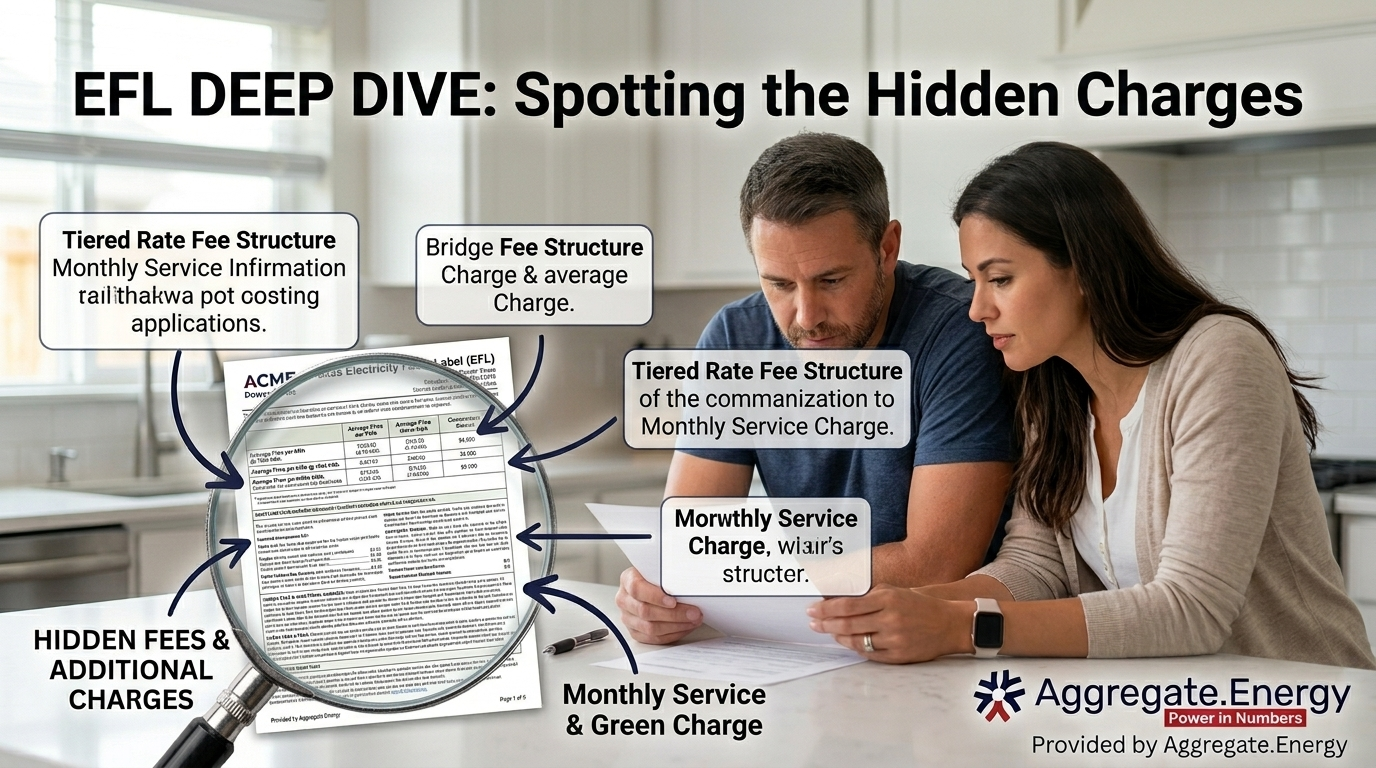
Have you ever signed up for an electricity plan because the advertised rate looked great, only to feel confused when your first bill arrived?
You're not alone.
Many Texans focus on the price they see in an advertisement and never look at the Electricity Facts Label (EFL). The problem is that the advertised rate doesn't always tell the full story.
An EFL contains important details about a plan's pricing, fees, contract terms, and usage requirements. Spending a few minutes reviewing it before you sign up can help you avoid unexpected costs later.
In this guide, we'll explain what an EFL is, where to find it, how to read it, and which sections deserve the closest attention before choosing a Texas electricity plan.
In a state where electricity competition gives consumers dozens of choices, understanding the EFL can save hundreds of dollars each year. According to recent average Texas electricity bill 2026 reports, many households now pay anywhere from $150 to $250 per month during high usage seasons, especially in the summer when air conditioners run almost nonstop. The U.S. Energy Information Administration also reports that Texas households use more electricity on average than most states because of the climate and cooling demand. That means even small pricing tricks inside a plan can make a noticeable difference on monthly bills.
What Is a Texas Electricity Facts Label (EFL)?
The Electricity Facts Label, often called an EFL, is one of the most important documents you'll see when shopping for electricity in Texas.
Think of it as the nutrition label for an electricity plan.
Just like a nutrition label helps you understand what's inside a food product, an EFL helps you understand what's inside an electricity plan.
It provides information about:
- Electricity rates
- Contract terms
- Fees and charges
- Renewable energy content
- Usage requirements
Before choosing any plan, the EFL should be one of the first documents you review.
Why Electricity Providers Must Provide an EFL
Texas electricity providers are required to provide an EFL for their plans.
The purpose is simple: transparency.
Without a standardized document, comparing plans would be much more difficult.
The EFL gives consumers a consistent way to review plan details and compare options side by side.
Where to Find the EFL Before Choosing a Plan
Most providers make the EFL available online.
You can usually find it:
- On the plan details page
- As a downloadable PDF
- Through electricity comparison websites
- During the enrollment process
If you can't find the EFL, that's a good reason to slow down and ask questions before signing up.
What Makes Texas EFLs Different From Other States
Texas has one of the most competitive electricity markets in the country.
Because residents can choose from many providers, comparing plans accurately becomes especially important.
The Texas EFL gives homeowners and renters a standardized way to evaluate plans instead of relying only on advertisements or promotional pricing.
Why Reading the EFL Matters Before You Choose a Plan
Many electricity plans look similar at first glance.
The EFL often reveals important differences that aren't obvious in the headline rate.
The Rate You See Isn't Always the Rate You Pay
One of the most common mistakes Texans make is assuming the advertised rate tells the whole story.
In reality, electricity pricing can include:
- Energy charges
- Delivery charges
- Base fees
- Usage requirements
- Bill credits
A plan advertised at a low rate may end up costing more than expected depending on how much electricity your household uses.
How Hidden Fees Can Increase Your Monthly Bill
Some plans include charges that don't get much attention during the shopping process.
Examples may include:
- Monthly base charges
- Minimum usage fees
- Early termination fees
- Late payment fees
These costs may not seem significant at first, but they can add up over time.
Reading the EFL helps you spot them before they impact your budget.
Why Many Texans Get Surprised After Their First Bill
Imagine signing up for a plan because it advertises a low price per kWh.
Then your first bill arrives and it's much higher than expected.
Often, the surprise isn't caused by higher electricity usage. It's caused by details hidden in the pricing structure that weren't reviewed beforehand.
That's why understanding the EFL can be one of the smartest steps you take when choosing a plan.
How to Read a Texas EFL (Step-by-Step Guide)
Reading an EFL becomes much easier once you know which sections matter most.
Check the Average Price per kWh
The EFL typically lists average pricing at:
- 500 kWh
- 1,000 kWh
- 2,000 kWh
These examples help estimate costs, but they are only estimates. Your actual usage determines your true rate.
Compare the Price at 500, 1000, and 2000 kWh
This section reveals whether the pricing stays stable or changes dramatically based on usage.
For example:
| Usage | Rate |
| 500 kWh | 17¢ |
| 1000 kWh | 11¢ |
| 2000 kWh | 15 ¢ |
This tells you the advertised low rate may only work near one specific usage level.
Look for Base Charges and Monthly Fees
Many plans include flat monthly charges regardless of electricity usage. A $9.95 monthly fee may not seem major, but over a year it adds up quickly.
Understand Minimum Usage Fees
Some plans charge extra if your monthly usage falls below a certain threshold, often 1,000 kWh.
That means smaller apartments or energy-efficient homes can end up paying more per kWh than expected.
Identify Tiered Pricing and Usage Credits
Usage credits are one of the most confusing pricing tactics in Texas electricity plans.
For example:
- Use above 1,000 kWh → receive $100 bill credit
- Use below 1,000 kWh → no credit
This structure can dramatically change your actual rate depending on monthly consumption.
Confirm Whether TDU Delivery Charges Are Included
TDU charges are delivery fees from your utility company. They cover maintaining power lines and infrastructure.
Some providers include these charges in the advertised rate, while others separate them. Always confirm how they’re handled.
The Most Important Sections of a Texas EFL
Contract Length and Plan Type
Most plans range from month-to-month agreements to contracts lasting 12, 24, or even 36 months.
Longer contracts may offer stable electricity rates Texas homeowners prefer during periods of rising market prices.
Fixed Rate vs Variable Rate Details
Fixed-rate plans keep the energy charge stable during the contract term.
Variable-rate plans can change monthly depending on market conditions. These plans sometimes start with low promotional pricing but increase later.
Early Termination Fee (ETF)
If you cancel before the contract ends, you may face an ETF. Some fees are flat amounts like $150, while others charge based on remaining months in the contract.
Deposit Requirements and Credit Checks
Some providers require deposits based on credit history. Others advertise no-deposit plans but compensate with higher rates.
Always check the EFL for deposit conditions before enrolling.
Late Payment Fees and Billing Policies
Billing terms matter more than people realize. Some plans charge late fees quickly, while others provide short grace periods.
Reading these policies upfront prevents unnecessary surprises later.
Common Pricing Tricks Hidden Inside Texas EFLs
Texas electricity marketing can sometimes feel designed to attract attention first and explain details later.
“Free Nights and Weekends” Plans
These plans sound attractive, especially for families who are home evenings and weekends. But daytime rates are often much higher.
If most of your electricity use happens during daytime hours, the “free” periods may not actually save money.
Plans With High Rates at Low Usage
Some plans punish lower consumption with high effective pricing.
This often affects:
- Apartments
- Small households
- Energy-efficient homes
Cheap Rates That Only Apply at One Usage Level
This is one of the biggest traps in texas electric rates comparisons.
A provider may advertise a low average rate based only on 1,000 kWh usage, even though many households consistently use more or less than that amount.
Auto-Renewal and Rate Change Clauses
Some contracts automatically renew into variable-rate plans after expiration. If customers forget to switch plans before renewal, rates can increase substantially.
Red Flags to Watch for When Reading an EFL
Rates That Change Based on Usage
If pricing swings dramatically between 500 and 2,000 kWh usage levels, the plan may not offer stable monthly costs.
High Monthly Fees With Low Advertised Pricing
- Low advertised rates sometimes hide expensive monthly service fees.
- Always calculate the total expected bill instead of focusing only on cents per kWh.
Unclear Language About TDU Charges
If the EFL doesn’t clearly explain delivery charges, ask questions before enrolling.
Transparency matters.
Big Difference Between 500 kWh and 2000 kWh Pricing
Large pricing gaps usually indicate:
- Tiered pricing
- Usage credits
- Minimum usage penalties
Stable plans generally show more consistent pricing across usage levels.
How to Compare Texas Electricity Plans Using the EFL
Match the Plan to Your Real Usage
The best plan for one household may be expensive for another.
A family in a large home with heavy summer AC usage will likely have different needs than someone in a small apartment.
Use past electricity bills to estimate your typical monthly usage before comparing plans.
Compare Plans Using Estimated Monthly Cost
Instead of focusing only on advertised rates, estimate your total monthly bill using your actual usage.
This provides a far more realistic comparison.
Choose Transparent Plans With Simple Pricing
Simple pricing structures are often easier to predict and budget for.
Many consumers prefer plans without:
- Usage credits
- Tiered pricing
- Complicated fee structures
Transparent plans may not always advertise the absolute lowest rate, but they often deliver more consistent monthly costs.
Best Tips to Avoid Overpaying for Electricity in Texas

Always Download and Read the EFL First
- Never enroll in a plan without reading the EFL carefully.
- A five-minute review can prevent months of overpaying.
Avoid Plans That Look Too Good to Be True
If a rate looks dramatically cheaper than competitors, there’s usually a condition attached. Low teaser pricing often hides usage restrictions or additional fees.
Pick a Plan With Stable Pricing for Summer
Texas summers can push electricity usage much higher. Stable pricing becomes especially valuable during hot months.
Many homeowners prefer predictable bills instead of plans that fluctuate with usage levels.
Choose Providers With Strong Customer Reviews
Customer feedback often reveals issues that pricing alone does not show, including:
- Billing accuracy
- Customer service quality
- Unexpected fees
- Renewal practices
How to Calculate Your True Rate
To completely bypass provider marketing tricks, use your real monthly usage and calculate your actual effective rate using the numbers listed inside the EFL.
True Monthly Bill = (Your kWh×Energy Charge) + Base Charge + TDU Fixed Fee + (Your kWh × TDU Per -kWh Fee) − Applicable Credits
Once you estimate the total monthly bill, calculate your true electricity rate:
True Rate per kWh = True Monthly Bill ÷ Your kWh
This method gives a much clearer picture of what you’ll actually pay instead of relying on advertised pricing alone.
Final Thoughts: Reading the Texas EFL Can Save You Hundreds
Many Texans spend more time comparing advertised rates than reviewing the document that actually explains how a plan works.
The Electricity Facts Label is often the best tool you have for understanding the true cost of an electricity plan.
At Aggregate Energy, understanding electricity rates Texas residents can realistically expect is part of making smarter energy decisions. A transparent plan with predictable pricing often delivers better long-term value than flashy promotions with complicated conditions.
Quick Checklist Before Signing Any Contract
Before enrolling in a plan, confirm:
- Average pricing at your usage level
- Whether TDU fees are included
- Contract length
- Early termination fees
- Base charges
- Usage credits
- Variable or fixed pricing structure
When to Ask for Expert Help Before Switching
If a plan feels confusing, complicated, or overly promotional, asking questions before signing is always worth it.
Electricity plans should be understandable. If pricing requires too much math to explain, that’s usually a sign to look more carefully.
FAQs
What does EFL mean in Texas electricity?
EFL stands for Electricity Facts Label. It is a standardized document that explains an electricity plan's pricing, fees, contract terms, and other important details.
Does the EFL include TDU charges?
Most EFLs explain how TDU delivery charges apply to the plan. Reviewing this section helps you understand the full cost of service.
Why do electricity rates change at different kWh levels?
Some plans use bill credits, usage thresholds, or tiered pricing structures that affect the average cost at different usage amounts.
What is a minimum usage fee in Texas electricity plans?
A minimum usage fee is an extra charge that may apply if your monthly electricity usage falls below a certain level specified in the plan.
How do I know if an electricity plan is truly fixed-rate?
Review the EFL carefully. A fixed-rate plan should clearly state that the energy rate remains unchanged throughout the contract term, although regulated delivery charges may still change over time.